
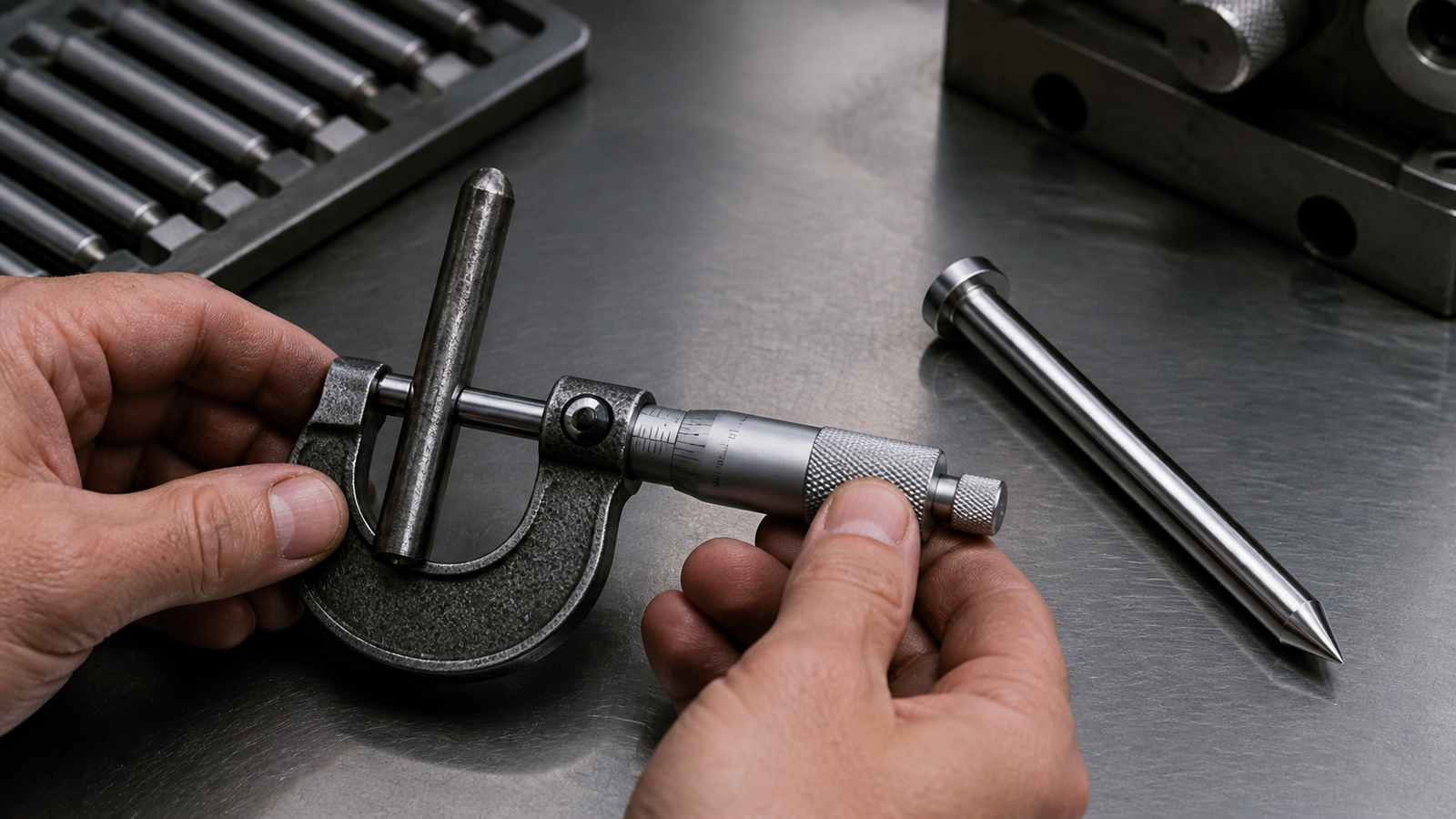
When a mold is down for a broken or worn pin, the goal is not just a new pin. It is a part that matches the original dimensions, so it seats in the same pocket and ejects on the same stroke. Send the failed pin or a clear print to a shop that can reverse the sample and grind a match, and have the original geometry and mating dimensions ready when you do.
The priority is an exact match, not a substitute
Sourcing a replacement is different from sourcing for a new build. You are not designing a tool, you are reproducing one part to the same dimensions. The risk is ordering something almost right and finding out at the bench that the diameter or head style does not seat. Matching the original dimensions avoids that.
Send the sample or a clear print
The most reliable spec is the failed pin itself. A grinding shop can measure the worn part, reverse it to a print, and make a match even when the original drawing is long gone. A clean drawing works too, and a print plus the sample is best of all, because the print states intent and the sample confirms what actually went into the tool. If you can, send the mating component, so the new part and its core pin are matched as a pair and the fit is verified against the part it has to run with.
What information to have ready
Whether you send a sample, a print, or both, a few details let the shop quote and build without a back-and-forth:
- The geometry that seats and ejects. Overall length, point diameter, and head style set how the pin sits in the plate and how it ejects.
- The fit dimensions. The working diameter and its tolerance are what decide whether the new pin slides and seals like the original.
- Quantity, one-off or set. Wear pins fail in patterns, and ordering the set can save a second outage.
- Any known failure mode. Galling, bending, or one-sided wear points to a fit or alignment issue worth catching now.
Reversing a worn part to a print
Reverse engineering a pin means measuring the surviving geometry and reconstructing the dimensions the part was built to, rather than the ones it has worn down to. A worn point or a galled diameter is read against the unworn datums on the same part, so the rebuilt print reflects the original intent. This is routine work for a precision shop that reverses a sample to a print and grinds diameters as tight as 0.00005 in, and it is why a missing drawing does not have to stall a replacement. The output is a clean print you can keep on file for next time.
Matching the original dimensions
A replacement is only as good as the fit. Matching the original means holding the seating diameter, head, length, and geometry so the new pin seats in the same pocket and ejects on the same stroke as the part it replaces. Holding those dimensions is what makes a match a match rather than a substitute.
A domestic, made-to-print source
Precision Core Pins is a US shop, so you work directly with the people grinding the part, by phone and to your print, rather than through a distributor or an overseas chain. A detail about a tolerance or a head style gets answered by the shop that is actually making the pin. Every replacement is custom, made to match the original and manufactured in Orange County, California.
Prepare before you need to
- Keep drawings on file for your wear pins so a replacement does not start from scratch.
- Identify a shop in advance that can reverse a sample to a print. See our capabilities and the industries we serve.
- Stock the pins you burn through so the common failures do not stop the press at all.
Frequently asked questions
Can you match a pin without a drawing? Yes. A worn or broken pin can be measured and reverse engineered to a print, then built to match. A sample is often a better starting point than an old drawing because it shows exactly what went into the tool.
What should I send to get a quote? The failed part, a print if you have one, and the basics: overall length, point diameter, head style, the working diameter and tolerance, and quantity. The mating component helps confirm fit.
Should I replace one pin or the whole set? If a pin failed from normal wear, the others in the same service are usually close behind. Replacing the set during one outage can save a second stoppage later.
Replacement pins, made to match
Precision Core Pins reverses samples and manufactures replacement core pins and ejector pins to match the original, in Orange County, California, made in the USA. Call (714) 540-5621 or request a quote.